Food & Water Safety

When standard lab methods can't find the source, pathogen genomics can.

When a foodborne or waterborne pathogen cluster emerges, tracing it to a source often requires genomic analysis. Theiagen can support agencies with the expertise to help you get from specimen to answer.

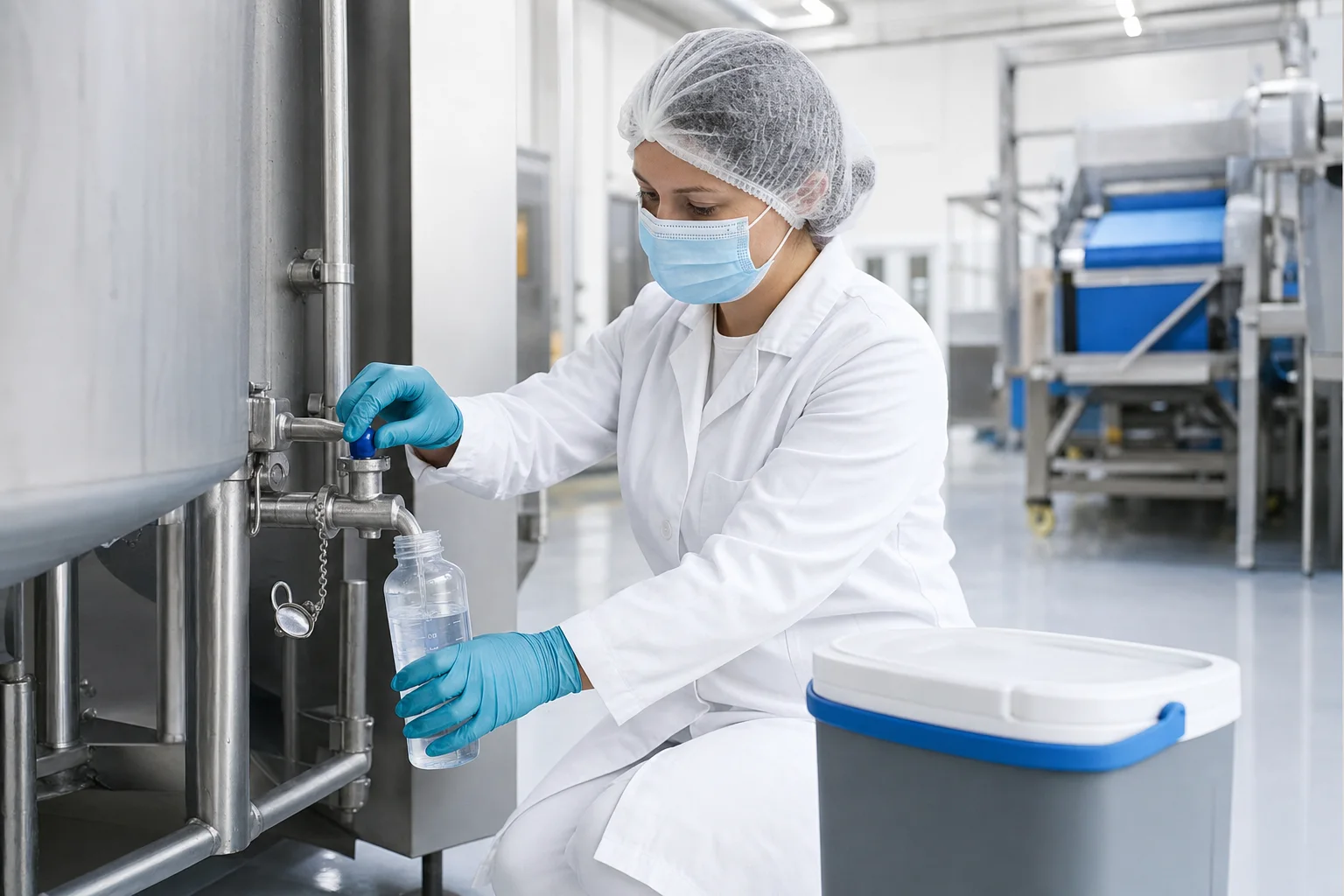
A food-safety scientist collects a water sample in a clean processing facility

We understand your world

Foodborne and waterborne pathogens don't respect facility boundaries. A contaminated lot moves through a distribution chain before the first case is reported. A water system serves thousands before a cluster is recognized. By the time genomic analysis is needed the pressure is already on — from regulators, from legal counsel, from the public.

The evidence your team produces has to answer a very specific question: are these cases linked, and where did it start? That answer has to hold up to FDA and USDA scrutiny, inform a recall decision, and document that your organization used every available tool to find the truth.

That's a different kind of pressure than clinical settings. And it requires a team that understands both the science and the stakes.

Most agencies have some sequencing capability. The harder problem is building the genomic surveillance infrastructure, NGS pipeline automation, and expert bioinformatics consulting layer that turns sequencing data into reliable, repeatable outbreak intelligence — and keeping that capability current as new pathogen variants emerge.

That’s the problem Theiagen was built to solve.

How we can help

When an outbreak is happening

  • Confirming whether cases across multiple states or facilities are linked to a common source — or coincidental
  • Standard epidemiology has narrowed the field but can't definitively identify the source or reservoir
  • A recall decision is on the table and the wrong call has serious consequences for public health, the supply chain, and your organization
  • Regulatory agencies are asking for evidence that state-of-the-art investigative methods were applied

We confirm whether cases share the same strain, map transmission pathways, identify the likely source, and produce documentation that holds up to FDA, USDA, and legal scrutiny — working within your existing infrastructure while the clock is running.

When you're building or expanding capability

  • Standing up genomic capability without a clear roadmap or in-house bioinformatics expertise
  • Building NGS pipeline automation that produces reliable outbreak intelligence — not just raw sequencing data
  • Deploying cloud-based genomic analysis infrastructure that scales with your surveillance program.
  • Expanding an existing program to cover new pathogen types without rebuilding what's working
  • Keeping workflows current as new variants emerge in the food chain

We start where you are. We build the workflows your program needs, working within your existing bioinformatics infrastructure whether that's Terra or a comparable platform, and stay alongside you as your program grows.

When your capacity is stretched

  • Training staff on best practices across bacterial, viral, and environmental pathogen workflows
  • Bioinformatics consulting capacity that's stretched — or the person who knows your workflows isn't there anymore

We become the expert bench you can pull on — training new staff, filling discipline gaps, and providing deep scientific expertise on complex cases without requiring you to maintain that depth full time.

Why trust Theiagen

Theiagen brings the full breadth of pathogen expertise — microbiology, bioinformatics, epidemiology, and software systems — to organizations that need reliable, proven genomic intelligence at scale. Our track record across 40+ public health labs demonstrates the scientific depth, operational reliability, and breadth of pathogen coverage our clients depend on.

Frequently Asked Questions

How does genomic sequencing help trace foodborne outbreaks?

Whole genome sequencing compares pathogen DNA from outbreak cases to determine whether they share the same genetic strain, confirming linkage that traditional epidemiology alone often cannot establish. Genomic analysis can identify transmission pathways, pinpoint likely sources such as processing facilities or distribution points, and provide evidence that supports timely public health action.

How can genomic evidence support a food recall decision?

Genomic analysis can determine whether cases across multiple states, facilities, or products share the same pathogen strain. This evidence helps support targeted recall decisions, informs regulatory actions, and demonstrates that state-of-the-art investigative methods were used to understand the outbreak and protect public health.

Can pathogen genomics support multi-state foodborne outbreak investigations?

Yes. Genomic analysis enables investigators to compare isolates across states and jurisdictions, determine whether cases are linked, and support coordinated investigations involving public health agencies, regulatory authorities, manufacturers, and food safety organizations.

Can genomic sequencing identify environmental reservoirs of contamination?

Yes. Genomic analysis can determine whether isolates from equipment, processing environments, water systems, or environmental samples are genetically related to outbreak strains. This information helps organizations identify likely reservoirs of contamination and target remediation efforts more effectively.

How can pathogen genomics improve food traceability?

Pathogen genomics helps investigators trace contamination through processing facilities, distribution channels, and supply chains by identifying genetic relationships among isolates. These insights improve source attribution and enable more precise interventions that minimize operational and public health impact.

What foodborne and waterborne pathogens does Theiagen analyze?

Theiagen works with a broad range of pathogens, including Salmonella, Listeria monocytogenes, Shiga toxin-producing E. coli (STEC), Campylobacter, Cronobacter, Vibrio, Legionella, Cryptosporidium, and antimicrobial-resistant organisms that affect food and water safety.

How does Theiagen help food and water safety organizations build genomic surveillance capability?

Theiagen helps organizations establish and expand pathogen genomics programs by developing workflows, optimizing bioinformatics pipelines, training staff, and providing ongoing scientific expertise. We work within existing infrastructure and help organizations build sustainable capabilities that evolve as new threats emerge.

Can Theiagen work with existing food safety laboratory infrastructure?

Yes. Theiagen works within existing laboratory and bioinformatics environments, including Terra and comparable platforms. We build around the sequencing capabilities and systems organizations already have, eliminating the need to replace existing infrastructure.

Why is genomic evidence becoming increasingly important in food and water safety investigations?

Regulators, manufacturers, and the public increasingly expect precise evidence regarding outbreak linkage and source attribution. Genomic analysis provides a level of resolution that traditional methods often cannot achieve and has become an essential tool for modern food and water safety investigations.